
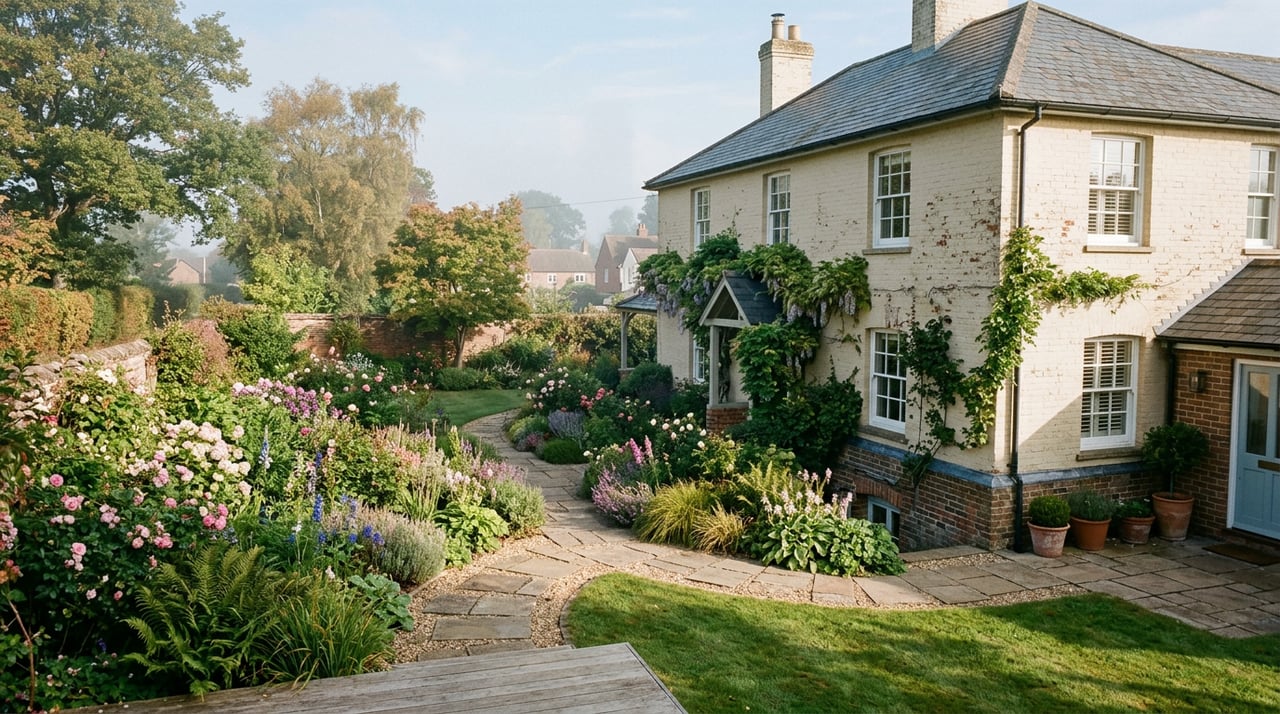
A buyer walks a 1968 ranch off King Springs Road, loves the hardwoods in the backyard, and assumes that once the sale closes, the pipe running under those roots to the street is the city's business. It isn't. The moment the deed records, that lateral line, the run from the house to the point where it meets Smyrna's main, becomes the homeowner's legal responsibility to maintain, repair, and pay for. The city says so plainly on its own public works page: lateral clogs and the sewer cleanout are the property owner's job, not the city's.
That single fact is the hinge this whole piece turns on. Most people touring an older Smyrna home think about the roof, the HVAC, maybe the foundation. Almost nobody asks who owns the forty feet of pipe between the house and the street, because on paper it looks like infrastructure. It isn't. It's yours the day you close, and in Smyrna's older pockets, that pipe is often older than the roof.
Where the risk actually lives, and why it isn't random
Smyrna's plumbing risk doesn't spread evenly across the city. It clusters by construction era, and construction era clusters by street. Homes built in the 1960s and 1970s along South Cobb Drive and near King Springs Road were plumbed with cast iron sewer lines, material that corrodes and cracks after five or six decades in the ground. Homes from the 1990s and 2000s in south Smyrna and near Vinings went in with copper water supply lines instead, which last longer but develop their own pinhole leaks under high municipal pressure, often behind a wall or ceiling where nobody sees the drip until the damage is done.
That means the meaningful question for a buyer looking at Concord Village, Creatwood Forest, Williams Park, or Forest Hills isn't just "how old is this house." It's "what decade was this street built in, and what pipe was standard then." A listing sheet won't answer that. A sewer scope will.
The tree canopy is doing more damage than the age of the pipe
Smyrna markets its mature tree canopy as a selling point, and it should. Big shade trees over a 1970s ranch are part of the appeal. They're also the single biggest threat to the pipe underneath the yard. Root intrusion is the most common defect inspectors flag in Smyrna's older sewer lines. Roots find their way into hairline cracks and loosened joints in cast iron pipe, then keep growing until the line slows, backs up, or collapses.
This creates a strange tension for sellers. The same oak that makes a King Springs Road listing photograph well in October is quietly working against the pipe it's rooted near. It's not a reason to worry about every tree on a lot. It's a reason to actually look at the pipe before assuming the tree is only an asset.
Worth knowing if a seller in this position ever needs to remove a tree before listing: Gunnison Tree's Smyrna permitting guide says Smyrna requires a Tree Removal Permit for any tree 24 inches in diameter or larger, measured at four feet off the ground. The permit costs $100, and if the tree is healthy, the property owner either replaces it with a two-inch caliper tree or pays $400 into the city's Tree Bank. It's not a large hurdle, but it's a step that catches sellers off guard when it shows up mid-listing-prep instead of before.
What a scope actually buys you
A sewer scope inspection runs a small camera through the line to check pipe material, joint condition, and whether roots or a sagging section, what inspectors call a belly, are already restricting flow. As a standalone add-on to a general home inspection, this typically costs in the low hundreds of dollars, sometimes less when bundled into the main inspection.
That's a small number next to what it protects against. A full sewer line replacement is an excavation project, not a repair call. For a buyer, the scope is the only real window into a pipe that a general home inspector isn't equipped to evaluate on a visual walkthrough. For a seller, it's leverage in the other direction: a pre-listing scope that comes back clean removes a point of negotiation before a buyer's inspector ever raises it, and one that comes back with a fixable issue, cleared roots, a minor line rehab, gives the seller room to address it on their own timeline instead of the buyer's.
The city's own infrastructure tells the same story
Smyrna isn't guessing that parts of its underground system are aging. The Water and Sewer Division maintains 250 miles of water lines and 140 miles of sewer lines citywide, and it has begun replacing all city water meters in sections, a project the city expects to run through late 2027. That's not a sewer line replacement program, and it doesn't touch the private lateral running from a house to the main. But it's a visible signal that the city is actively managing an older network, section by section, because the infrastructure has reached the point where it needs it.
For a buyer evaluating a house on a 1970s street, that citywide context matters. It's not a reason for alarm. It's a reason to treat the sewer scope as standard due diligence rather than an optional upsell, the same way a buyer wouldn't skip a roof inspection on a house with visible curling shingles.
A short checklist before listing or writing an offer
For sellers in Smyrna's pre-1980s neighborhoods:
- Get a sewer scope before listing, not after an offer comes in. A clean report removes a negotiating point. A flagged issue gives you time to fix it on your schedule.
- If a mature tree near the line needs to come down as part of prep work, check the diameter first. Anything at or above 24 inches needs a Tree Removal Permit through the city's Arborist Division before work starts.
- If the home has ever had a sewer backup, the City of Smyrna offers up to $600 in reimbursement toward installing a backwater valve, worth mentioning to a buyer's inspector as a mitigating step already taken.
For buyers looking at homes built before 1980 in Smyrna:
- Ask what decade the sewer line was installed, not just the house. Cast iron installed in the 1960s and 1970s is well past the point where problems become common.
- Don't assume "the city owns the pipe." The lateral from the house to the main is the homeowner's, before and after closing.
- Treat a sewer scope as standard for anything built before the 1990s, especially on a lot with large mature trees.
Frequently asked questions
Is a copper pipe home automatically safer than a cast iron one? Not entirely. Copper resists root intrusion and corrosion far better than cast iron, but it's vulnerable to pinhole leaks from water pressure and chemistry, often hidden behind walls. Different pipe, different failure mode, same reason to check before you buy.
If you're weighing a house in one of Smyrna's older sections and want to talk through what that means for your specific street and timeline, Shawn Nixon can walk you through what to ask before you write an offer, or how to get ahead of it before you list.
This article is general information, not legal, tax or financial advice. Consult a qualified professional about your situation.